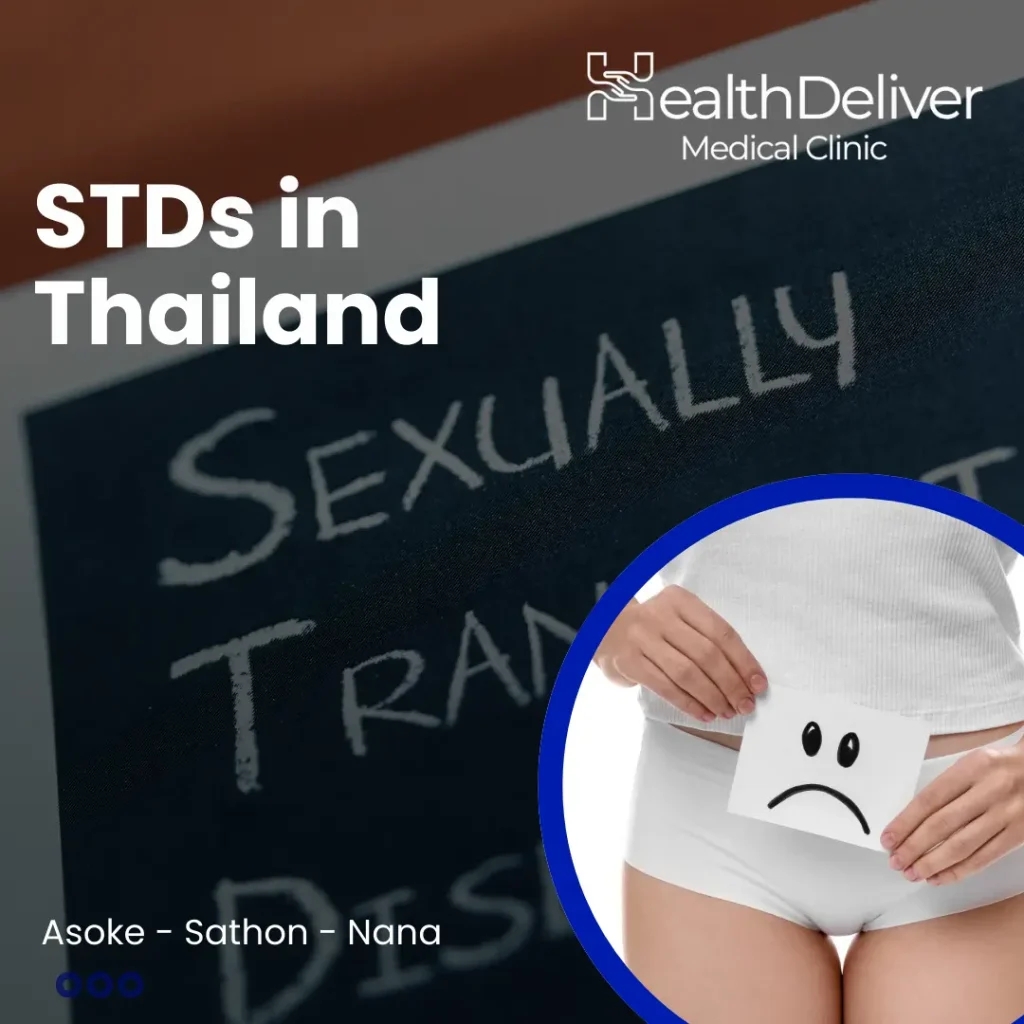
STDs in Thailand are rising, especially syphilis, gonorrhea and chlamydia, with youth (15–24) and key populations hit hardest; HIV remains significant with ~560,000 people living with it and ~9,300 new infections yearly. You’ll want regular testing (every 3–6 months if sexually active), consistent condom use, HPV/hepatitis B vaccination, and rapid linkage to treatment. Confidential clinics and youth-friendly services are expanding across Bangkok and tourist areas. Keep going to get testing locations, symptoms, and prevention steps.
Book Your Appointment Today!
This trend is particularly pronounced among young adults aged 15 to 24, who now account for more than half of all new infections. As the Thai government works to expand access to testing and treatment, understanding the risks, symptoms, and prevention methods for the country’s most common STDs is essential for safeguarding your health while in the Kingdom.
Key Takeaways on STDs in Thailand
- Syphilis, gonorrhea, and chlamydia rates have risen since 2018, with youth (15–24) accounting for over half of new infections.
- Chlamydia is most common; many STIs are asymptomatic, so routine screening is essential even without symptoms.
- Sexually active people under 25 and high-risk groups (MSM, multiple partners, nightlife patrons) should test every 3–6 months.
- Prevention: consistent condom use, HPV/hepatitis B vaccination, and PrEP for people at substantial HIV risk.
- Confidential testing and treatment available at public hospitals, STI clinics, community health centers, and youth-friendly services nationwide.
The 2026 STD Situation in Thailand
Thailand’s STD environment has shifted sharply — rates of syphilis, gonorrhea, and chlamydia have climbed since 2018, with youth (ages 15–24) now accounting for over half of new infections; you need clear, actionable information.
Recent surveillance shows rises across Bangkok and nationwide, alongside persistent HIV prevalence. As someone serving communities, you’ll prioritize testing access, targeted health education, and youth-friendly services.
Recent surveillance finds rising STDs in Thailand and persistent HIV — prioritize testing access, targeted education, and youth-friendly services.
Data-driven screening (every 3–6 months for sexually active young individuals) will catch asymptomatic infections early. Focus resources on outreach in nightlife and schools, partner notification support, and same-day testing availability.
Preventive steps — condoms, PrEP for high-risk groups, HPV and hepatitis vaccines — reduce transmission and protect fertility.
Measure impact: track cases, testing rates, and treatment completion.
Why STDs Are Rising in Thailand
Because young people are having more partners and using condoms less, you’re seeing faster transmission of syphilis, gonorrhea and chlamydia—especially in nightlife and tourist hotspots—while asymptomatic infections and social stigma keep many from testing. You should know drivers so you can serve others: declining condom use, alcohol-related risk behaviors, limited sex-education access, and higher sexual partner turnover in urban areas push sexually transmitted diseases in thailand upward. Target high-risk groups with empathy and prevention.
| Driver | Practical focus |
|---|---|
| Unprotected sex & multiple partners | Promote condoms, PrEP, routine screening |
| Alcohol-related risk behaviors | Nightlife outreach, brief interventions |
| Asymptomatic infections & social stigma | Confidential testing, education access |
Note: Act to reduce transmission and protect communities.
Act to reduce transmission and protect communities.
The Most Common STDs in Thailand Today
You’re seeing a shift in Thailand’s STD environment: chlamydia is now the most common infection (6.66% positivity in young women), gonorrhea cases are rising with growing antimicrobial resistance, and syphilis is climbing fastest among 15–24-year-olds.
HIV remains significant with roughly 560,000 people living with it and ~9,000 new infections yearly, while HPV is the most common viral STD and a key target for vaccination.
Know the risks, get screened regularly, and use prevention tools like condoms, PrEP, and HPV vaccination.
Chlamydia (Most common in 2025)
Chlamydia is now the most common STI in Thailand, with a national study showing 6.66% positivity and the highest rates in girls aged 10–19. It’s often asymptomatic in women, so you can have and transmit the infection without knowing.
You should recognize that chlamydia has a high infection rate among sexually active youth and can cause pelvic inflammatory disease and long-term health problems, including infertility. If you serve others—partners, patients, community—you’ll want to promote testing and safer behaviors.
Look out for unusual discharge or pelvic pain, but don’t rely on symptoms. Screening is recommended for sexually active people under 25 and for anyone with new partners.
Use condoms, limit sexual contact when uncertain, and get tested to prevent the spread.
Gonorrhea
Gonorrhea is a common bacterial STI that’s resurging in Thailand—7,991 cases were reported in 2023—and you should be aware of its signs, risks, and growing antibiotic resistance.
You’ll recognize gonorrhea as a sexually transmitted disease that often causes green or yellow discharge and painful urination, though many infections are asymptomatic.
If you serve others, prioritize screening for high-risk groups (15–24, MSM, sex workers) and encourage testing after unprotected sex or new partners.
Early treatment prevents complications like infertility and pelvic inflammatory disease and supports broader disease control.
Note rising antimicrobial resistance: follow national guidelines for therapy and guarantee test-of-cure when indicated.
Promote condom use, routine screening every 3–6 months, and prompt care referrals.
Syphilis (Fastest-growing STD in Thailand)
Syphilis cases have surged across Thailand, disproportionately affecting people aged 15–24—Bangkok youth now face a rate of 91.2/100,000—and you should know the signs, risks, and need for testing.
You’ll encounter many asymptomatic infections, so screening is recommended for sexually active young people and for anyone after unprotected sexual intercourse.
Hospitals and Bangkok hospital clinics report rising STD rates; public-health teams urge routine checks to prevent congenital syphilis and neurological complications.
As someone serving patients, partners, or your community, prioritize sexual health education, prompt diagnosis, and timely treatment to interrupt transmission.
Be mindful of how syphilis interacts with broader rates of HIV surveillance without discussing HIV care here; focus on prevention, partner notification, and accessible screening recommended pathways.

HIV
About 560,000 people in Thailand are living with HIV, with roughly 9,300 new infections annually, and the epidemic remains concentrated in key groups—MSM, sex workers, and people with multiple partners—so you should prioritize regular testing, condom use, and consider PrEP if you’re at higher risk.
You’ll learn that the rate of HIV is highest among men who’ve sex with men and other high-risk groups; WHO guidance stresses targeted prevention and early diagnosis.
Getting tested through routine HIV screening at a trusted facility like HealthDeliver Clinic reduces the spread of STDs and helps link you to ART, which prevents serious complications and onward transmission.
Serve your community by testing regularly, notifying partners, and supporting access to prevention services.
HPV (Human Papillomavirus)
HPV is the most common viral sexually transmitted infection in Thailand and worldwide, causing genital warts and driving cervical, anal, and oropharyngeal cancers; vaccination for all genders and routine cervical screening remain the primary tools to prevent disease and detect precancerous changes early. You should prioritize hpv vaccination, regular screening, and counseling clients or community members about risks. Preventive steps cut cancer risk and transmission; vaccinate adolescents, offer catch-up doses, and support cervical cancer screening for sexually active people. Track genital warts as sentinel events and refer for treatment. Use harm-reduction messaging in outreach and clinics.
| Action | Impact |
|---|---|
| Vaccination | Lowers cervical cancer |
| Screening | Detects precancerous lesions |
| Treat warts | Reduces transmission |
| Educate | Strengthens prevention strategies |
Hepatitis B & C
1–2% of Thais carry hepatitis B today thanks to childhood vaccination, while hepatitis C affects roughly 0.5–1% of the population; both viruses can spread sexually or via blood and lead to cirrhosis and liver cancer if untreated.
You should know prevalence and risks to protect those you serve: hepatitis B is largely preventable by vaccine, while hepatitis C is now curable with direct-acting antivirals.
Screen clients, partners, and patients routinely—especially if they’ve multiple partners, inject drugs, or raised liver enzymes. Early detection prevents progression to liver cirrhosis and onward transmission.
Offer confidential screening, vaccination for hepatitis B, and linkage to treatment for hepatitis C.
Prioritize harm reduction, partner notification, and education to reduce infection and community burden.
Herpes (HSV-1 & HSV-2)
Herpes simplex viruses (HSV‑1 and HSV‑2) cause painful, recurrent genital sores and are highly transmissible even when you have no symptoms. Clinical surveillance in Thailand shows substantial prevalence across age groups, and silent shedding drives ongoing spread.
You should recognize that herpes is highly contagious, has no cure, and leads to recurrent outbreaks; antiviral meds lower symptoms and transmission risk. Prioritize screening for partners and high‑risk groups, counsel others, and integrate prevention strategies into community care.
- Test: regular screening for hsv-1/hsv-2 if sexually active or symptomatic.
- Treat: start antiviral meds for outbreaks and suppression therapy when indicated.
- Prevent: condoms, avoid contact during sores, disclose to partners.
- Support: educate, reduce stigma, encourage clinic access.
High-Risk Groups for STDs in Thailand (Based on 2024–2025 Data)
Because young people and certain networks drive transmission, you should pay attention if you’re aged 15–24, identify as a man who’s sex with men (MSM), have multiple recent partners, work in or frequent tourism-heavy areas (Bangkok, Pattaya, Phuket, Chiang Mai), or are pregnant — these groups show the highest infection rates and bear the greatest risk of complications and onward spread.
Young people (15–24), MSM, those with multiple partners, tourism workers/visitors, and pregnant people face higher STI risks.
As someone serving others, act proactively: prioritize routine screening for high-risk groups, especially 15–24 year olds and MSM.
Data link rising syphilis, gonorrhea, HIV, chlamydia and other STds in Thailand to multiple partners and tourism-heavy regions.
Encourage confidential testing, offer condoms and PrEP referrals, support partner notification, and reduce stigma so people seek timely care.
Regular screening cuts transmission and prevents severe outcomes.

Symptoms to Watch For
Many STDs cause no symptoms at all, so you should prioritize routine screening even if you feel fine; when symptoms do appear, key warning signs include unusual genital discharge, burning with urination, sores or ulcers, pelvic pain, bleeding between periods, and swollen lymph nodes—seek testing promptly if you notice any of these.
You serve others by protecting partners and community; screening is essential for sexually active individuals. Watch for these common indicators and act early to prevent complications.
- Unusual genital discharge or odor — often chlamydia/gonorrhea.
- Burning when urinating — common with bacterial infections.
- Sores, ulcers, or rashes — could signal syphilis or herpes.
- Pelvic pain, bleeding between periods, swollen lymph nodes — needs urgent evaluation.
If uncertain, seek care immediately.
How STDs in Thailand are Spread — The Real Risks
When you have unprotected vaginal, oral, or anal sex — especially with multiple or new partners — you greatly increase your chance of acquiring bacterial, viral, or parasitic STDs; shared needles and direct contact with sores or infected fluids (including during asymptomatic periods) also transmit infections like HIV and hepatitis C.
You should know transmission follows direct mucosal or skin contact, blood exposure, or needle sharing; alcohol-related impaired judgment raises partner turnover and lowers protective action.
As sexually active individuals, you can silently carry infections, so recognizing symptoms to watch for helps prompt testing.
Prioritize clear communication with partners, timely testing, and treatment to reduce transmission to partners. Serving others means protecting yourself to protect the community.
Prevention Strategies and Health Education (2025 Recommendations)
Knowing how STDs spread makes prevention straightforward: use proven tools and behaviors to cut your risk. You’ll protect yourself and those you serve by combining prevention strategies with data-driven habits.
Prioritize regular testing and confidential testing—screening every 3–6 months if you’re sexually active or in high-risk groups. Use a condom consistently for vaginal, anal, and oral sex; encourage partners to do the same. Get vaccinated (HPV, hepatitis B) and consider PrEP if relevant.
- Screen regularly: confidential testing, rapid results, follow-up care.
- Barrier protection: correct condom use every encounter.
- Immunize: HPV and hepatitis B for lasting protection.
- Educate: raise awareness, reduce stigma, support partner notification.
These steps reduce STDs, protect health, and sustain community trust.
Where to Get Regular Testing for STDs in Thailand
When you’re concerned about exposure, HealthDeliver Clinic offers fast, confidential testing with full panels for HIV, syphilis, chlamydia, gonorrhea, hepatitis B/C and HPV, plus same-day appointments and at-home blood collection.
Testing matters because most STDs are treatable or curable when found early, which prevents complications and reduces onward transmission.
Book a confidential screen to protect your fertility and partners and to catch asymptomatic infections common in people aged 15–24.
HealthDeliver Clinic
Because early detection cuts complications and transmission, HealthDeliver Clinic offers fast, confidential STD testing across Thailand with same-day appointments and at-home blood collection.
You’ll get extensive screening panels (HIV, syphilis, chlamydia, gonorrhea, hepatitis B/C, HPV) and a private consultation focused on prevention and service to others.
Staff prioritize confidentiality and clear risk assessment so you can support partners and community health. Expect expert consultation, rapid results, and evidence-based treatment options when needed.
- Fast same-day appointments and at-home blood collection
- Full screening panels for sexually active individuals
- Private consultation with risk assessment and counseling
- Rapid linkage to treatment options and partner support
Book a confidential STD testing visit to protect yourself and those you serve.
Why Testing Matters
If you’re sexually active in Thailand, regular testing cuts risk and saves lives: early detection of infections like chlamydia (now the country’s most common STI among young women), rising syphilis and gonorrhea cases, and asymptomatic HIV leads to timely treatment, reduces complications (infertility, congenital infections, neurological disease), and lowers onward transmission.
You owe it to yourself and those you serve to prioritize STD testing as prevention. HealthDeliver offers fast, confidential testing and thorough screening panels so you can identify infections before symptoms appear.
Early detection improves outcomes, enables prompt treatment, and helps prevent transmission to partners and patients. Increase awareness in your community, get screened every 3–6 months if sexually active, and use results to protect fertility and public health.
What Happens During an STD Visit?
Curious what to expect at an STD visit? At HealthDeliver Clinic you’ll get straightforward, confidential testing focused on early detection and prevention. A clinician will take a sexual-health risk assessment, review symptoms, and explain options.
Curious what to expect at an STD visit? Expect confidential, straightforward testing, a risk assessment, symptom review, and clear options.
- Clinic intake: confidential testing consent, history, focused exam.
- Diagnostics: blood tests, urine tests, swabs and rapid HIV tests as indicated.
- Treatment: same-day prescriptions or injections when appropriate; counseling on prevention.
- Aftercare: follow-up care scheduling, partner notification support, and referrals for specialist care.
You’ll leave with clear results timelines, prevention advice (vaccines, PrEP, condoms), and an emphasis on protecting partners and community.
This visit serves others by reducing transmission and preserving reproductive health.
Conclusion
You’re hearing more STI cases, yet many infections stay silent — 12,300+ reported in Bangkok in 2025 while most carriers show no symptoms. That contrast means vigilance beats chance: test after new partners, use condoms, get HPV shots and consider PrEP if at risk. Prevention cuts transmission and protects fertility. Fast, confidential clinics make care simple — act now to keep statistics from becoming your story.

HealthDeliver STD Testing Clinic
HealthDeliver is a trusted healthcare provider in Thailand, specializing in comprehensive STD screening, prevention, and treatment services. Our tailored approach ensures individuals have access to regular testing, expert consultations, and the latest in preventative care, including vaccinations for Hepatitis B and HPV. With a commitment to enhancing awareness about STDs in Thailand,
Book Your Appointment Today!
HealthDeliver, withits full range of blood testing facilities, empowers you to take charge of your sexual health with confidence and convenience. Protect yourself and your partners by choosing HealthDeliver as your partner in health.
Book a Confidential discreet appointment with HealthDeliver
FAQs About STDs in Thailand Latest Statistics 2025
What is the prevalence of hiv infection and other infections and diseases in Thailand?
Thailand has made progress in reducing HIV infection rates through public health campaigns, testing and antiretroviral treatment, but HIV remains a significant public health concern alongside other sexually transmitted infections and diseases. Surveillance data historically report variable rates by region and population; key affected groups include men who have sex with men, sex workers and people who inject drugs. The World Health Organization and the Thailand Ministry of Public Health monitor trends and support programs to control the spread, increase testing, and expand treatment access.
What happens if an STD is left untreated and how can it cause infertility?
Many STDs left untreated can lead to serious complications. Bacterial infections like chlamydia trachomatis and gonorrhea can cause pelvic inflammatory disease in women, which may lead to ectopic pregnancy and cause infertility. Untreated syphilis (caused by Treponema pallidum) can progress to severe systemic disease. Viral infections such as genital herpes and untreated human immunodeficiency virus infection also carry long-term health consequences. Early diagnosis and treatment are essential to prevent these outcomes.
How are infections around the genitals and anus diagnosed and treated in Thailand?
Infections around the genitals and anus are diagnosed through clinical examination, laboratory tests (including NAAT for chlamydia trachomatis and gonorrhea), serology for syphilis, and PCR-based tests for viral pathogens. Treatment depends on the cause: bacterial infections are treated with antibiotics; viral infections like genital herpes are managed with antiviral medications; and HIV infection is treated with antiretroviral therapy. Public clinics and private hospitals in Thailand offer confidential testing and treatment, and many programs aim to make services accessible without stigma.
Which STDs are one of the most common and which are caused by bacteria?
One of the most common STDs globally and in Thailand is chlamydia (caused by the bacterium chlamydia trachomatis). Gonorrhea and syphilis (treponema pallidum) are also bacterial STDs. These infections are typically treatable with appropriate antibiotics, though rising antimicrobial resistance in gonorrhea is a growing concern. Prompt testing and adherence to treatment courses help prevent spread and complications.
Can STDs spread through anal or oral routes, and who is at higher risk such as men who have sex without protection?
Yes, many STDs in Thailand can be transmitted through anal or oral routes as well as vaginal intercourse. Practices such as condomless sex, including receptive anal or oral sex, increase risk. Men who have sex with men are among higher-risk groups, but risk factors apply to anyone engaging in sexual activity without protection. Using condoms and dental dams, routine screening, and reducing the number of partners help control the spread.
What are common symptoms like yellow or green discharge and yellowing of the skin, and when should I seek care?
Yellow or green discharge from the urethra, vagina or anus can indicate bacterial infections such as gonorrhea or trichomoniasis. Yellowing of the skin (jaundice) may be a sign of hepatitis, which can also be sexually transmitted. Other signs include sores, abnormal bleeding, pain on urination, and loss of appetite in systemic infections. Seek testing and medical care promptly if you notice these symptoms or have had a potential exposure, since early treatment reduces complications and transmission risk.
How does the disease caused by a virus like genital herpes compare to a disease caused by bacteria in terms of management?
Viral STDs in Thailand such as genital herpes (a disease caused by a virus) and human immunodeficiency virus are generally managed rather than cured: antiviral medications suppress symptoms and reduce transmission risk but do not eliminate the virus. Bacterial STDs like chlamydia trachomatis, gonorrhea, and syphilis are often curable with appropriate antibiotics if diagnosed early. Management also includes partner notification, testing, and prevention counseling to reduce one person to another transmission.
What role do the World Health Organization and the Ministry of Public Health play in controlling STDs in Thailand?
The World Health Organization provides global guidance, technical support and targets for STI control, while Thailand’s Ministry of Public Health implements national surveillance, prevention, testing, and treatment programs. Together they work on public education, expanding access to condoms and harm-reduction services, supporting antenatal screening to prevent mother-to-child transmission, and strengthening laboratory capacity to detect infections and diseases.
How quickly can symptoms appear — will an infection may show signs within a few weeks after exposure?
Some STDs produce symptoms within a few weeks after exposure, while others can be asymptomatic for months or years. For example, primary syphilis may present with a painless sore a few weeks after exposure, gonorrhea and chlamydia symptoms often appear within days to weeks, but chlamydia can be silent and still cause long-term complications. Regular screening is important because absence of symptoms does not guarantee lack of infection or inability to cause inflammation, infertility, or onward transmission.ct, including anal or oral sex. It is important for individuals to communicate openly with their partners about their sexual health and consider regular testing to reduce the risk of transmission.